ପ୍ରଭାକର ଶତପଥୀ
The poet’s life
His involvement with readers extends beyond the printed page. In November 2013, he took part in a National Book Trust discussion in Bitana, Jajpur, on promoting reading in rural areas. That occasion belongs to the same literary life as his poems and editorial work: the meeting of books with the communities that read them.
In Singhasan, the throne becomes a way of looking at power across time. Myth and remembered history enter the same field of vision as political ceremony, public spectacle, and ordinary daily life. Crowns, manuscripts, courts, roads, and villages recur in changing relationships; the people who witness authority are as significant as those who claim it.
The collection’s sixty-eight poems form a connected journey. Its opening and closing return to the earth beneath the throne, giving the book a circular movement: what has been buried can be found again, and the old questions can begin anew. Read together, the poems invite attention to the distance between grandeur and lived experience, and to the persistence of everyday life around the symbols of rule.
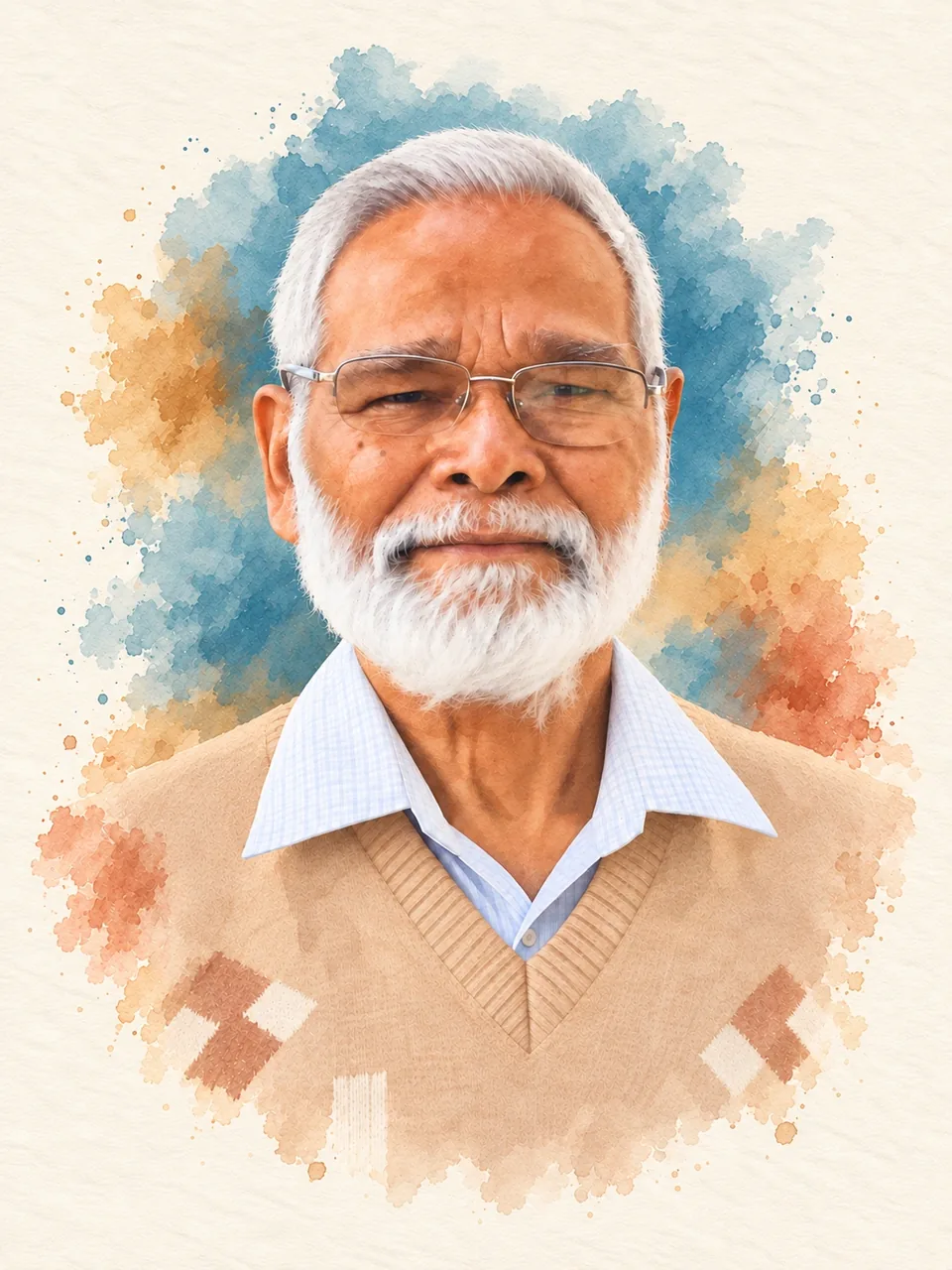
Pravakar Satapathy lives and breathes poetry. It lights up his face, finds expression in his gestures, and flows into conversation.
He loves meeting people and talking about poems, memories and life. If you’re in Bhubaneswar, he would be happy to welcome you for a conversation. Get in touch with his family to arrange a visit—you don’t have to be a poet to share a love of poetry.
The poet in conversation
Alongside the poems and printed record, this conversation preserves another way of meeting Pravakar Satapathy: through his own voice, expressions and presence. Set aside half an hour to watch him in conversation on Breakfast Odisha.
Breakfast Odisha · Prameya News7
Odia interview · 33 minutes 10 seconds · Uploaded 20 November 2017